Microsoft Fabric 2026 Conference Key Highlights & Announcements from Atlanta: Why This Matters for Customers Now
Some technology events give you a long list of feature updates. Others give you something far more valuable: a clear sense of where the platform is heading next.
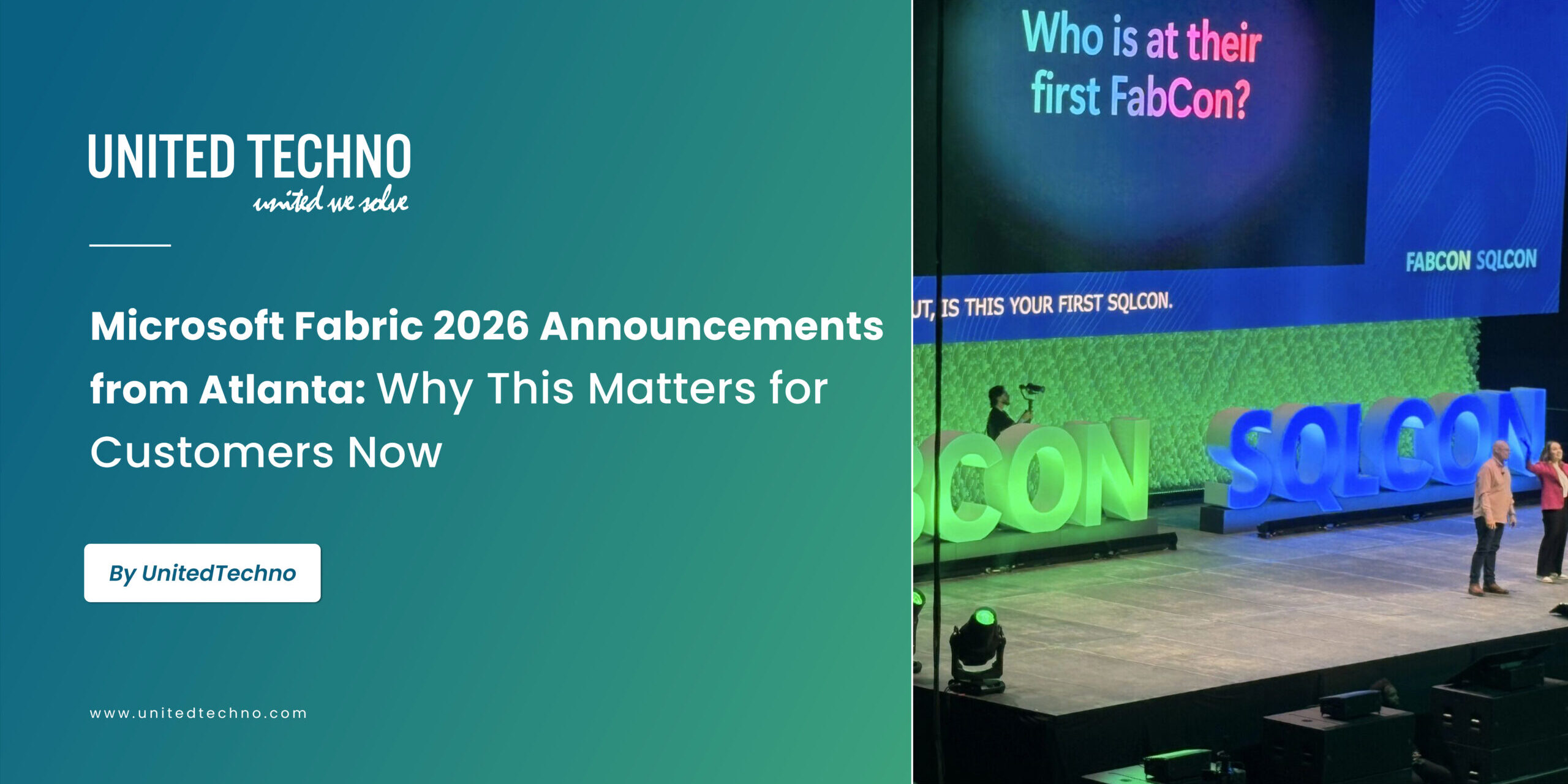
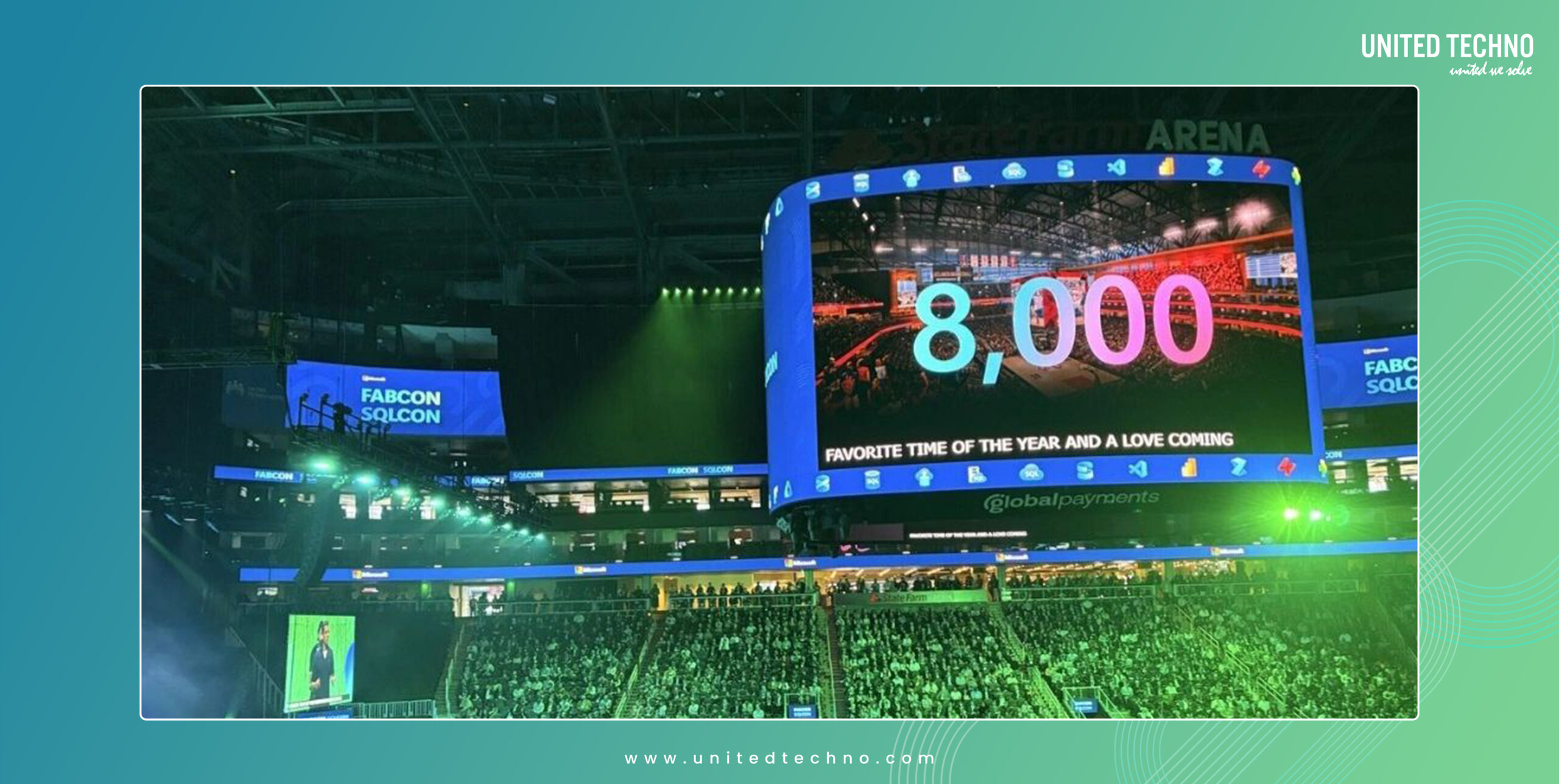
That was the real takeaway from Microsoft Fabric Community Conference 2026 in Atlanta.
The announcements coming out of FabCon 2026 made one thing very clear. Microsoft is pushing Fabric into a more mature, more connected, and more business-ready future — one where data integration, Power BI, AI, real-time intelligence, and a broader enterprise data architecture work together more naturally.
For customers, that matters.
Because most organizations are not struggling due to a lack of dashboards or a shortage of tools. They are struggling because data is still fragmented, onboarding new sources still takes too long, governance still slows progress, and AI ambitions often move faster than the data foundation underneath them.
What Microsoft showed in Atlanta is exciting because the platform is evolving in the direction customers actually need.
At UnitedTechno, we see this as more than a conference recap. We see it as a practical signal for customers who want to turn Microsoft investments into faster business value.
Why FabCon Atlanta 2026 felt important
The biggest takeaway from Atlanta was not one individual feature.
It was the bigger pattern.
Microsoft is clearly shaping Fabric into a stronger enterprise platform where organizations can:
- onboard data faster
- improve governance from the start
- make Power BI more valuable in AI-driven scenarios
- support more real-time decision-making
- bring analytics, databases, and OneLake closer together
- reduce friction between data engineering, reporting, and AI
That matters because these are exactly the areas where many transformation programs slow down.
A platform can look impressive in demos. But if ingestion is slow, integration is inconsistent, governance is treated as a later phase, and business users still cannot get timely answers, then ROI gets delayed.
The Fabric story in 2026 feels more grounded. It is no longer only about creating a unified analytics environment. It is about creating a connected business platform for modern data work.
Data integration is becoming easier and more practical One of the strongest themes from the conference was data integration.
Microsoft placed strong emphasis on Fabric Data Factory and new Dataflow Gen2 capabilities. That matters because data integration is often the point where excitement turns into implementation delay. Many organizations have a strong analytics vision, but once the project starts, teams run into the hard reality of onboarding data sources, standardizing transformations, and building repeatable ingestion patterns.
This is why the direction Microsoft outlined in Atlanta matters so much.
If getting data into Fabric becomes easier, more scalable, and more enterprise-friendly, customers will be in a much better position to:
- shorten implementation timelines
- reduce engineering overhead
- standardize onboarding
- move faster from pilot to production
In practical business terms, faster onboarding means faster visibility, faster reporting, and faster wins for the teams funding the initiative.
And that is where the conversation changes from “interesting product roadmap” to “real customer impact.”
Power BI is becoming even more strategic in the AI era
For many organizations, Power BI is still the most visible and valuable part of their Microsoft data investment.
What stood out in the 2026 Fabric messaging is that Power BI is no longer being framed only as a reporting layer. It is increasingly being positioned as part of an AI-ready semantic foundation.
That is an important shift.
Because in the next phase of analytics, value will not come only from dashboards. It will come from how well the platform supports trusted answers, richer business questioning, smarter planning, and AI-assisted decisions.
This makes the underlying semantic layer more important than ever. Clean business definitions, well-structured models, trusted KPIs, and governed data are no longer just “nice to have” for reporting. They are becoming essential for any organization that wants to use AI in a useful, responsible, and business-friendly way.
For customers, the message is simple:
Your Power BI environment becomes even more valuable when it sits on top of a strong Fabric foundation.
That means the work many organizations have already done in Power BI is not being replaced. It is becoming more strategic.
Real-time intelligence is moving closer to business reality
Another important theme from Atlanta was the growing role of real-time intelligence.
Businesses today do not just want historical reporting. They want to understand what is happening now — in customer behavior, digital activity, operations, logistics, supply chain flow, and field performance.
That is why this direction matters.
The market is shifting from static reporting toward faster decision-making. In many industries, the teams that perform best are not simply the ones with the most data. They are the ones that can respond to change faster.
That makes real-time intelligence increasingly valuable for industries like:
- retail
- logistics
- supply chain
- utilities
- field service
- operations-heavy businesses
As Fabric continues to strengthen in this area, customers gain a more realistic path toward timely, actionable insight rather than just end-of-week visibility.
And for many business leaders, that is the difference between reporting on problems and actually responding to them.
Fabric is becoming a broader platform story
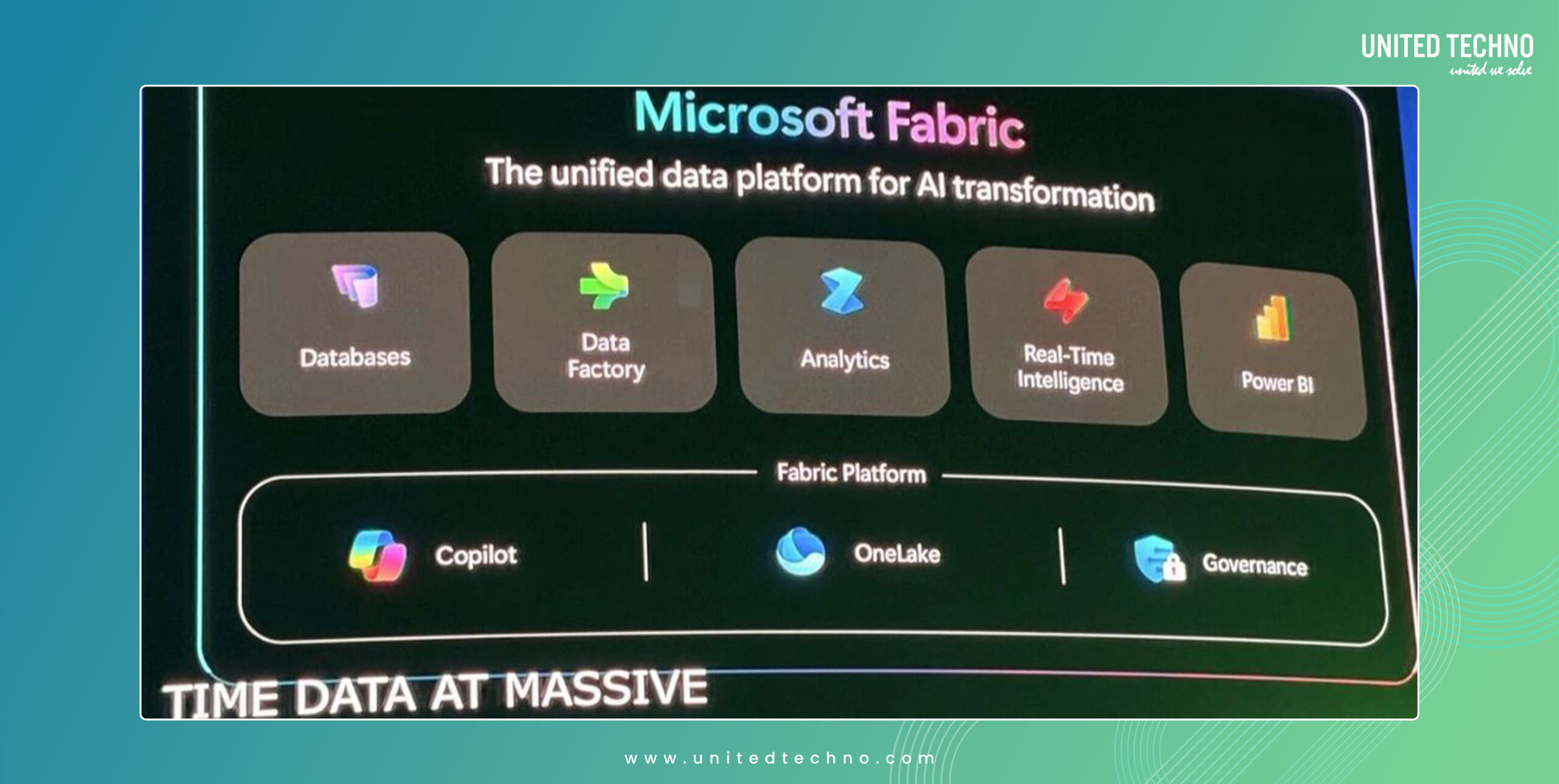
One of the more strategic developments around FabCon 2026 was Microsoft’s continued push to connect analytics, databases, OneLake, and AI more closely.
This matters because enterprises do not want separate architectural conversations for every workload anymore. They want simpler, cleaner, more unified environments where data can move more easily across ingestion, transformation, reporting, planning, and application scenarios.
That broader direction makes Fabric more relevant across multiple teams — not just BI teams, but also data engineering leaders, platform architects, analytics owners, and organizations trying to create a long-term Microsoft-centered data strategy.
This is one of the reasons Fabric feels more significant now than it did in its earlier phase. It is being shaped not just as an analytics product, but as a broader enterprise data foundation.
Where this becomes real: DataAccel and faster ROI
This is the point where customers usually ask the most important question: How do we get value from this faster?
That is where DataAccel, UnitedTechno’s AI-based data ingestion and migration accelerator, becomes especially relevant.
The challenge many customers face is not that the platform lacks potential. The challenge is the gap between platform potential and implementation reality.
That gap is where ROI gets delayed.
Customers may invest in Fabric, align leadership, define priorities, and identify key use cases — but if onboarding data takes too long, if manual work piles up, or if governance is added too late, the timeline stretches and momentum fades.
DataAccel is designed to help close that gap.
It aligns strongly with the direction Microsoft highlighted in Atlanta because it focuses on the part of the journey where speed matters most: getting data onboarded, structured, governed, and ready for analytics faster.
Why DataAccel fits so well with the Fabric 2026 direction
Faster pipeline deployment
One of the biggest value points for customers is speed. DataAccel is built to shorten deployment timelines so teams can move from planning to execution faster.
Reduced manual effort
A configuration-driven approach helps reduce repetitive work and creates a more standardized onboarding path, which is especially useful when organizations are scaling across multiple sources and teams.
Quicker source onboarding
The first few sources are often where Fabric projects either gain momentum or lose it. Accelerating source onboarding helps customers reach visible outcomes sooner.
Governance from day one
As Fabric becomes more important for AI and semantic-driven analytics, governance cannot be an afterthought. A governance-first approach helps customers move quickly without creating avoidable risk later.
A faster path from ingestion to insight
Customers do not invest in modern data platforms just to move data around. They invest to make that data useful. The real value comes when ingestion leads quickly into reporting, analytics, planning, and AI readiness.
Put simply, if Fabric is the platform, DataAccel helps customers start realizing the value of that platform sooner.
And that is why this combination matters.
What customers should take away from all of this
There is a bigger story here than product releases.
Microsoft is moving Fabric toward a future where the platform is not only more powerful, but also more practical. The vision is becoming easier to understand: a connected environment where data ingestion, transformation, governance, analytics, semantic models, and AI support one another more naturally.
For customers, that creates a real opportunity.
If you are already using Power BI, this is the right time to think beyond reporting and evaluate how your semantic foundation can support AI-driven business experiences.
If you are planning Fabric adoption, this is the right time to focus on the layer that often determines success or failure: how quickly and consistently you can onboard, govern, and operationalize data.
If you are investing in AI, this is the right time to remember that AI readiness starts with trusted data foundations, not just model experimentation.
And if you are trying to show faster ROI, this is where acceleration matters most — not in theory, but in execution.
Microsoft Fabric 2026 Conference Key Highlights – From announcement to action
The Microsoft Fabric 2026 announcements from Atlanta were exciting not because they were flashy, but because they felt grounded in real customer needs.
This was not just a story about more features. It was a story about making Microsoft Fabric more connected, more enterprise-ready, and more capable of delivering business value across the full journey — from ingestion to analytics to AI.
At UnitedTechno, we see this as a meaningful moment for customers.
The platform is moving quickly. The Power BI story is getting stronger in the age of AI. The integration layer is improving. And the broader architecture vision is becoming clearer.
The organizations that move now — with the right strategy, the right governance model, and the right acceleration approach — will be in a much stronger position to turn Fabric into measurable business value.
That is what makes this moment exciting.
Not just what Microsoft announced — but what customers can actually do with it now.
Ready to turn Microsoft Fabric into faster business value?
If your organization is evaluating Microsoft Fabric, Power BI modernization, AI readiness, or data integration acceleration, this is a great time to start the conversation.
UnitedTechno helps customers build practical, scalable, and business-focused data strategies. And with DataAccel, we help shorten the path from platform investment to measurable ROI.
Explore more about us & data accel:
UnitedTechno — https://www.unitedtechno.com/
DataAccel — https://www.unitedtechno.com/ai-products/dataaccel-data-ingestion-tool/