The Biggest AI Problem Isn’t Intelligence Anymore
For the last three years, the technology industry has been obsessed with AI models.
Every major discussion revolved around model performance, reasoning capabilities, token windows, benchmarks, and foundation model innovation.
At Databricks Data + AI Summit 2026 Highlights, the conversation shifted in a different direction.
The keynote delivered a message that many enterprise leaders are beginning to recognize firsthand:
One of the biggest challenges is no longer model intelligence. It is providing models with trusted enterprise context.
Modern AI models are already capable of generating content, analyzing information, writing code, and answering questions. What they often lack is access to trusted enterprise knowledge, business processes, governance controls, operational data, and organizational context.
This year’s Summit focused on helping organizations close that gap.
The result was a vision that extends well beyond analytics, data engineering, or generative AI.
Throughout the keynote, Databricks consistently reinforced a single message: enterprise AI cannot succeed as a standalone capability. It must be built on a unified platform that brings together data, governance, AI, analytics, and operational workloads. That philosophy shaped nearly every product announcement unveiled during the Summit.
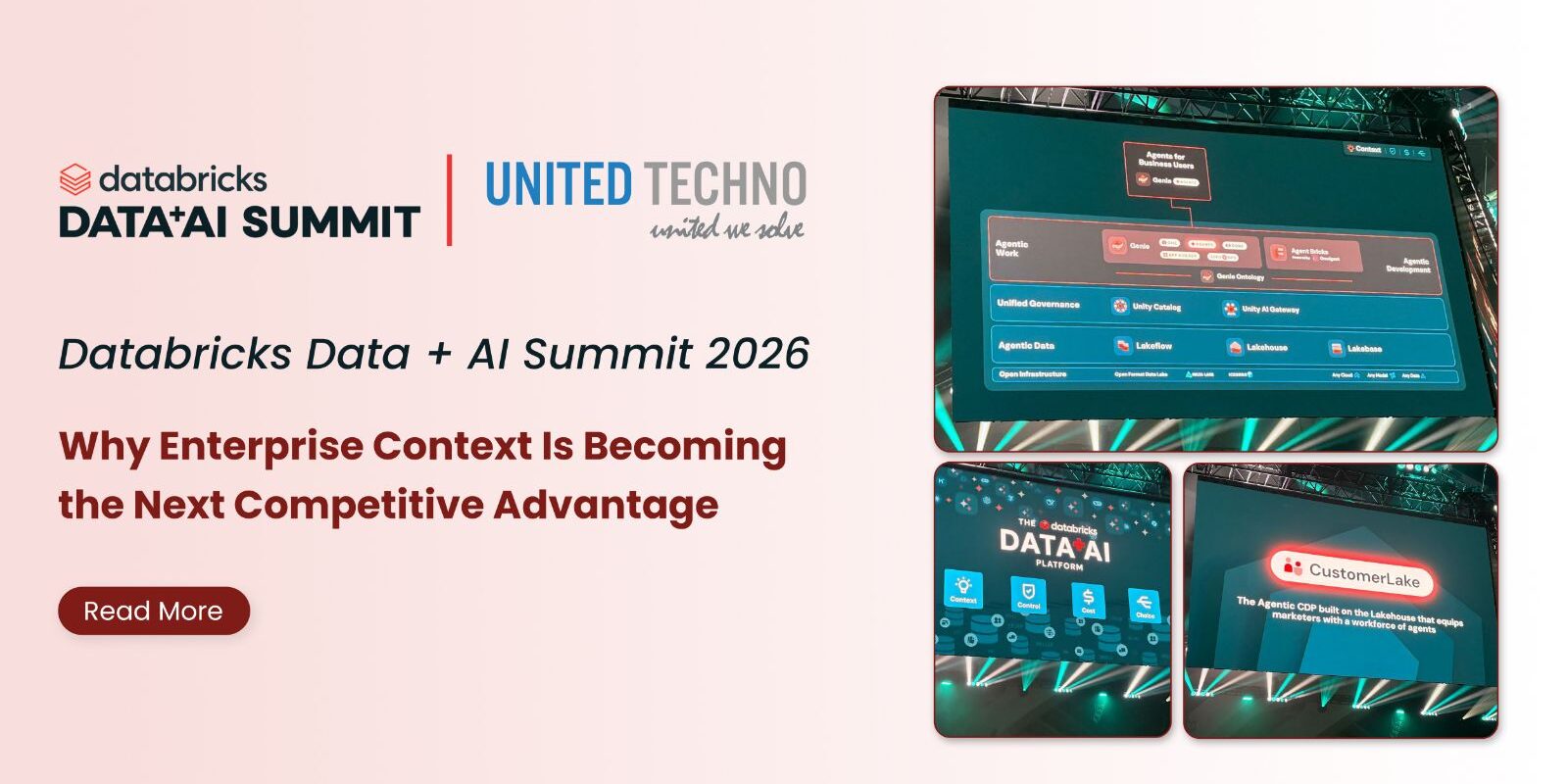
Context. Control. Cost. Choice.
Together, these pillars may define how organizations operationalize AI over the next decade.
The Next Evolution of Enterprise Platforms
Every major technology shift creates a new system of record.
ERP systems became the system of record for transactions.
CRM platforms became the system of record for customer interactions.
Data platforms became the system of record for analytics.
Databricks is betting that the next evolution will be something different.
An Agentic System of Record.
The concept emerged repeatedly throughout the keynote.
Instead of humans manually navigating applications, dashboards, reports, and workflows, intelligent agents will increasingly interact with enterprise data, business processes, and operational systems on behalf of users.
For that model to work, enterprises need more than AI.
They need context.
They need governance.
They need security.
They need cost visibility.
And they need open architectures that prevent new technology silos from emerging.
Databricks’ announcements throughout the Summit were designed to address exactly those challenges.
Why Enterprise Context Has Become the New Data Strategy
One of the strongest messages from the Summit was that enterprise data alone is no longer enough.
Organizations must connect structured data, unstructured content, business knowledge, metadata, documents, and enterprise context into a unified intelligence layer.
This is where Databricks introduced several important innovations.
Genie Ontology
Databricks unveiled Genie Ontology to help organizations create a semantic understanding of enterprise information.
Historically, data platforms stored data.
Future AI platforms must combine enterprise data with business context to generate more relevant and trustworthy responses.
For example, AI systems should understand that:
- Customer Lifetime Value is a business metric.
- Revenue and bookings are calculated differently.
- Supply chain metrics have operational dependencies.
- Business terminology varies across departments.
This shift from storing data to understanding data may become one of the most important architectural changes in enterprise AI.
The organizations that can effectively model enterprise knowledge will likely gain a significant advantage as AI adoption accelerates.
The Rise of the AI-Native Data Engineering Team
For data engineering leaders, Summit 2026 delivered perhaps the clearest indication yet that the role of the data engineer is evolving.
Historically, engineering teams focused on:
- Building pipelines
- Managing transformations
- Maintaining infrastructure
- Monitoring jobs
- Supporting analytics
Those responsibilities remain important.
But Databricks’ latest announcements suggest that engineering teams will increasingly become enablers of AI-driven business operations.
Lakeflow Designer
Lakeflow Designer introduces a visual pipeline development experience that simplifies building, monitoring, and managing modern data pipelines. By reducing engineering complexity, it enables teams to focus more on delivering business value than managing pipeline orchestration.
Genie Code
Genie Code brings AI-assisted development directly into the engineering workflow.
Teams can accelerate development activities while reducing repetitive coding tasks.
Genie ZeroOps
Operational management is also becoming increasingly automated.
Genie ZeroOps helps automate operational management and improve engineering productivity.
Taken together, these announcements point toward a future where engineers spend less time maintaining infrastructure and more time designing trusted data products, governance frameworks, and AI-ready architectures.
This shift closely aligns with United Techno’s strategic investments across Data Engineering, AI, and Lakehouse modernization. Over the past year, we have expanded our Databricks-focused capabilities to help organizations accelerate platform modernization, build AI-ready data foundations, operationalize real-time analytics, and adopt governed AI solutions at enterprise scale. As innovations such as Lakeflow Designer, Genie Code, and Genie ZeroOps mature, we see significant opportunities to combine platform-native intelligence with our delivery accelerators, implementation frameworks, and industry-specific modernization approaches.
Real-Time Intelligence Is Becoming the Default
For years, batch processing dominated enterprise data architectures.
That assumption is beginning to change.
Several Summit announcements highlighted Databricks’ growing focus on real-time processing and low-latency architectures.
ZeroBus
ZeroBus introduces a new approach to event-driven architectures and data movement.
Spark Real-Time Mode
Spark Real-Time Mode extends Apache Spark with native real-time processing capabilities, enabling organizations to support low-latency data pipelines and streaming AI applications.
Lakeflow Enhancements
Together with Lakeflow, these capabilities signal a broader industry trend.
Organizations increasingly expect:
- Real-time customer insights
- Real-time operational visibility
- Real-time AI decisions
- Real-time automation
As enterprises move toward agent-driven workflows, waiting hours for data refreshes becomes increasingly difficult to justify.
Real-time context is becoming a business requirement.
Governance Is Expanding Beyond Data
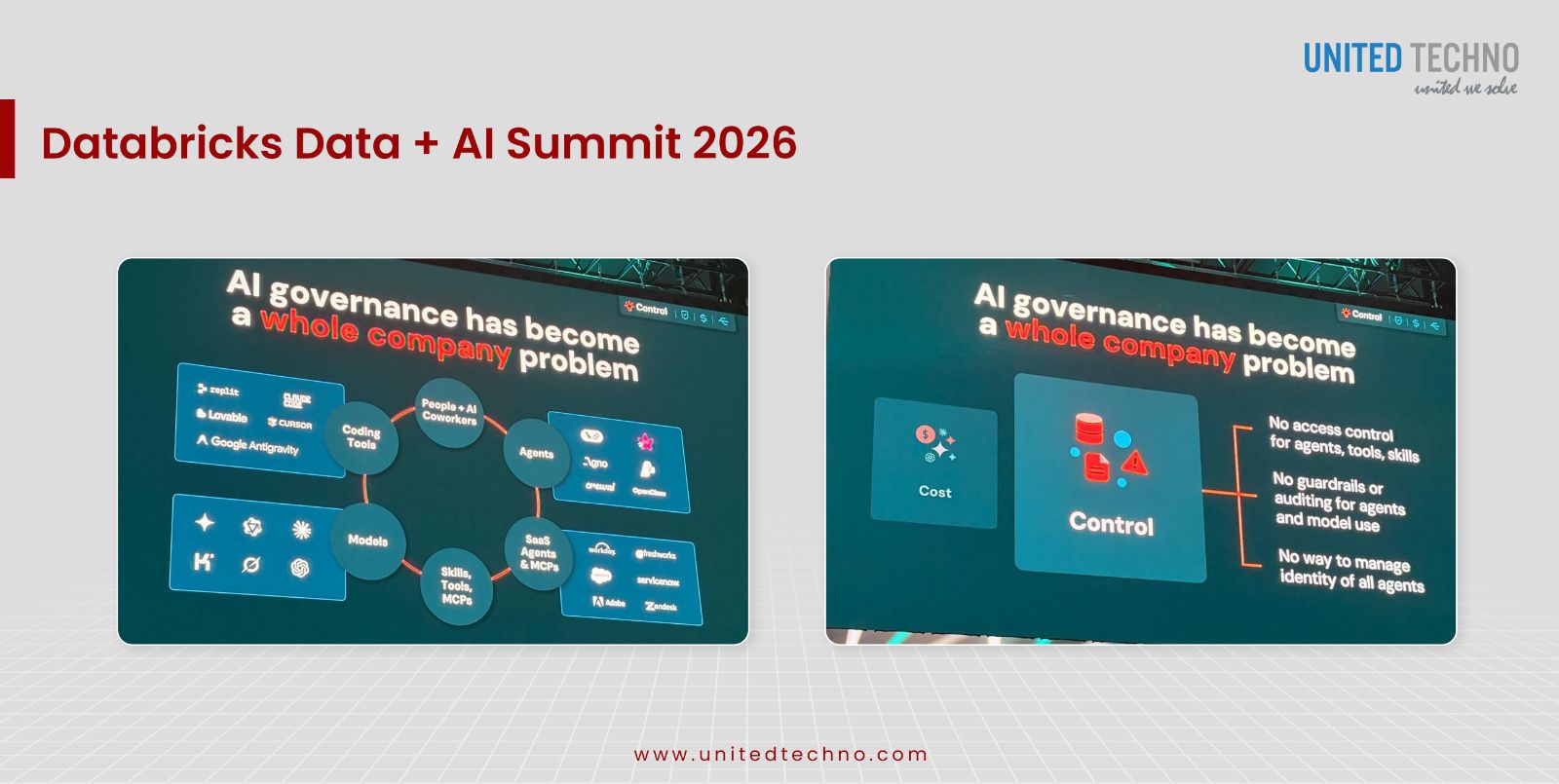
One of the most important takeaways from the Summit was the recognition that governance can no longer stop at tables and columns.
As enterprises deploy AI agents, new governance challenges emerge.
Organizations must now govern:
- Models
- Prompts
- AI Applications
- Skills
- MCP Servers
- Policies
Databricks addressed this challenge through announcements including Unity AI Gateway and broader governance enhancements across the platform.
This marks a significant shift in responsibility for data leaders.
Governance is evolving from a compliance exercise into a strategic AI-enablement capability.
The organizations that build governance into their AI architecture from the beginning will be better positioned to scale AI safely and effectively.
Cost Is Becoming a Strategic AI Metric
Another recurring theme throughout the Summit was cost visibility.
Traditional data platforms focused on compute, storage, and infrastructure costs.
AI introduces an entirely new economic model.
Organizations now need visibility into:
- Model consumption
- Agent utilization
- Token spending
- Business value generated by AI
This is where Databricks’ “Cost” pillar becomes particularly important.
The future of enterprise AI will not simply be measured by model performance.
It will be measured by ROI.
Just as FinOps emerged to optimize cloud spending, many organizations will likely develop AI cost governance strategies focused on balancing innovation with economic outcomes.
Open Architectures Continue to Win
One of the most consistent themes across Databricks history has been openness.
Summit 2026 reinforced that commitment.
The company highlighted continued investments in:
- Delta Lake
- Apache Iceberg
- Delta Sharing
- Open Sharing
- PostgreSQL
- MLflow
These technologies are more than technical choices.
They reflect a broader architectural philosophy.
As AI ecosystems become increasingly interconnected, organizations want flexibility rather than dependency on a single vendor.
Databricks’ message was clear:
The future of enterprise AI will be built on open standards, interoperable architectures, and shared ecosystems rather than closed platforms.
Why This Matters for Enterprise Modernization Programs
Many organizations today are managing a mix of legacy data warehouses, fragmented data lakes, custom integration frameworks, and disconnected AI initiatives. The Databricks vision unveiled at Summit 2026 reinforces what many enterprises are already discovering: modernization is no longer just a migration exercise. It is about creating a unified foundation where data engineering, analytics, governance, operational applications, and AI can work together seamlessly.
At United Techno, we are actively expanding our Databricks practice around Lakehouse modernization, AI-powered Data Engineering, real-time data platforms, governed AI implementations, and enterprise-scale data product development. Our focus is not simply helping organizations move to Databricks, but helping them realize measurable business outcomes from the platform.
Customer Data Is Entering the Agentic Era
One announcement that received significant attention was CustomerLake.
Databricks introduced CustomerLake as a customer data platform designed to unify customer information across multiple systems into a single customer view.
What makes the announcement noteworthy is CustomerLake combines customer data with AI capabilities to enable richer personalization and customer engagement across channels.
Rather than relying on traditional audience segmentation, CustomerLake introduces the concept of continuous one-to-one engagement through AI-driven personalization.
For marketing and customer experience leaders, this signals a broader shift.
Customer intelligence is moving from segmentation toward individualized decision-making at scale.
Summit 2026 in 60 Seconds: Quick Highlights
✓ Enterprise AI requires Context, Control, Cost, and Choice
✓ Genie Ontology introduces semantic understanding for enterprise AI
✓ Lakeflow Designer accelerates modern data engineering
✓ Genie Code and Genie ZeroOps advance AI-native engineering
✓ Spark Real-Time Mode and ZeroBus strengthen real-time architectures
✓ Unity AI Gateway expands governance and AI controls
✓ Lakebase brings PostgreSQL into the Lakehouse ecosystem
✓ Open Sharing reinforces Databricks’ commitment to interoperability
✓ CustomerLake introduces AI-powered customer intelligence
✓ Governance expands beyond data to include models, prompts, AI applications, skills, policies, and MCP servers
✓ Open standards remain central to Databricks’ platform strategy
✓ Unity Catalog continues to serve as the governance foundation for enterprise AI
✓ Lakehouse architecture expands beyond analytics to operational AI workloads
What Enterprise Leaders Should Do Next
The most important takeaway from Databricks Summit 2026 is not a product announcement.
It is a mindset shift.
Organizations that continue viewing AI as a standalone initiative will struggle to scale adoption.
Organizations that treat AI as an enterprise capability built on trusted data, business context, governance, and operational discipline will be better positioned to create sustainable value.
Over the next 12 to 24 months, enterprise leaders should focus on five priorities:
Build Enterprise Context Layers
Connect data, documents, business knowledge, and operational processes.
Modernize Governance Frameworks
Expand governance beyond data to include agents, prompts, models, and AI workflows.
Prioritize Real-Time Architectures
Support faster decision-making with low-latency data platforms.
Invest in Open Ecosystems
Avoid creating new silos through proprietary AI architectures.
Measure AI Through Business Outcomes
Evaluate initiatives based on revenue growth, productivity improvements, operational efficiency, and cost optimization.
Many organizations now face an important question: “Where do we begin?” The answer is rarely adopting another AI tool. It starts with building the right operating model, one that combines trusted data foundations, governance, modern data engineering, and real-time intelligence. These are the capabilities that ultimately translate technology investments into measurable business value.
The Next Competitive Advantage Is Context
Databricks Summit 2026 may ultimately be remembered as the moment the industry stopped asking whether AI models were intelligent enough.
Instead, the focus shifted toward a more practical question:
Can organizations provide those models with the context they need to create business value?
That challenge sits squarely at the intersection of data engineering, governance, architecture, and AI strategy.
The organizations that solve it will move beyond AI experimentation and begin building AI-enabled enterprises.
In the years ahead, data will remain essential.
But context may become the asset that separates leaders from followers.
For enterprise leaders, the message from Databricks Data + AI Summit 2026 Highlights is clear. The future belongs to organizations that can unify data, AI, governance, and business processes into a single operational framework. The technology is rapidly becoming available. The differentiator will be how effectively organizations implement, govern, and scale it.
At United Techno, we are continuing to expand our Databricks capabilities across Data Engineering, AI, Data Governance, Real-Time Analytics, Lakehouse Modernization, and Agentic AI initiatives to help organizations accelerate this transition. As the Databricks ecosystem evolves, our focus remains on helping clients move from experimentation to execution and from platform adoption to measurable business outcomes.
Ready to Turn Your Databricks Investment into Measurable Business Outcomes?
Whether you’re modernizing legacy data platforms, building an enterprise Lakehouse, implementing real-time analytics, developing AI-powered data products, or preparing for Agentic AI adoption, United Techno can help you accelerate the journey.
Schedule a Complimentary Databricks Strategy & AI Readiness Assessment
Our Databricks specialists will help you:
✓ Assess your AI and data maturity
✓ Identify modernization opportunities
✓ Evaluate Lakehouse architecture readiness
✓ Define governance and security frameworks
✓ Build a roadmap for scalable AI adoption
Talk to a Databricks Expert →