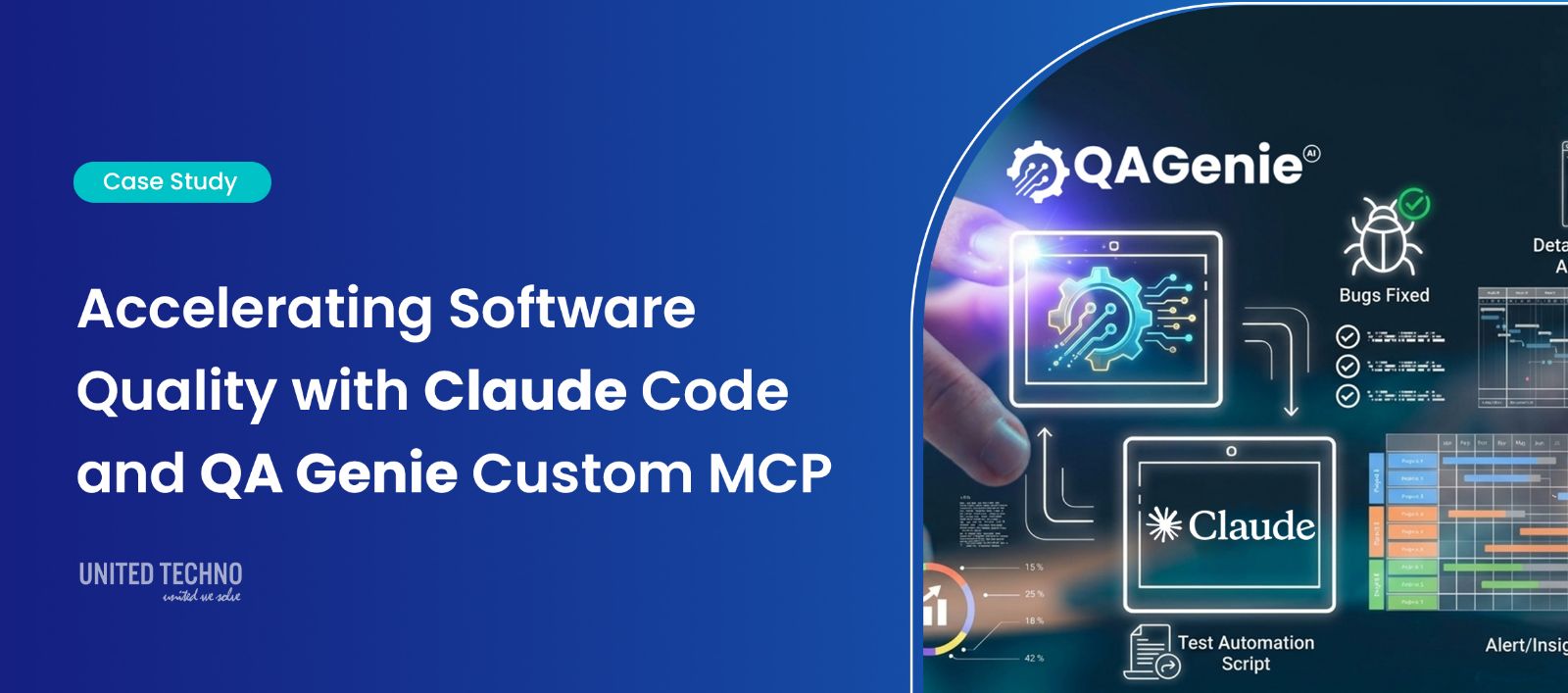
QA Genie Custom MCP is a custom testing tool that works with Claude Code to automate software testing. It helps generate test cases, identify code coverage gaps, prioritise testing areas, track progress, and report defects, making Claude Code for QA Testing faster and more efficient.
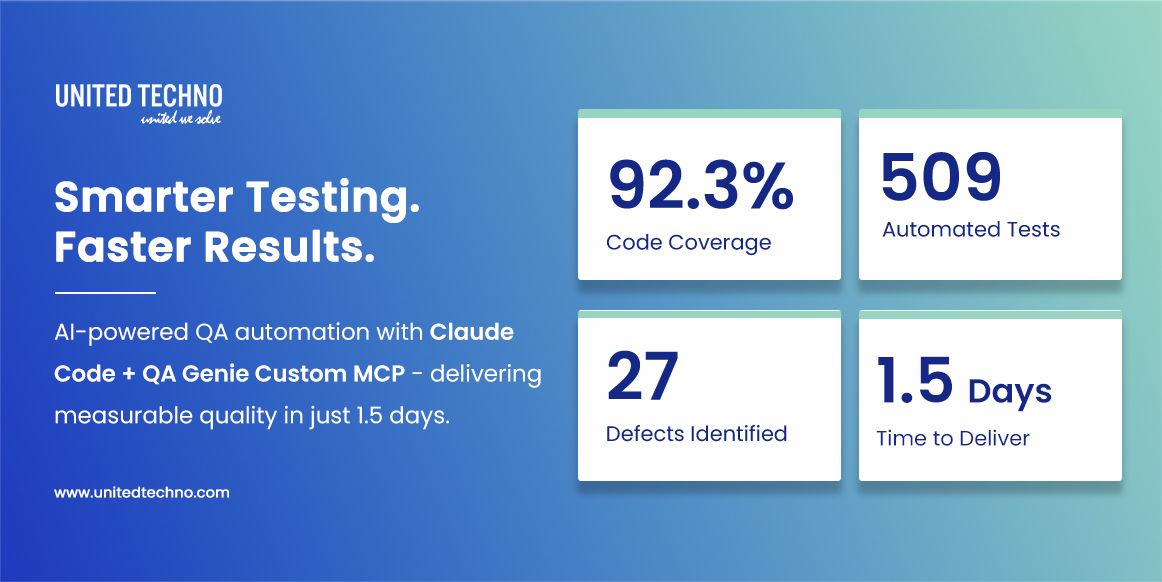
What can AI-powered test automation achieve in just a day and a half? We combined Claude Code with our QA Genie Custom MCP to achieve 92.3% code coverage, automate hundreds of tests, and uncover real application defects—all while using approximately 60% of our weekly Claude usage (around $5–10).
Discover how this approach to Claude Code for QA Testing demonstrates the potential of AI to make software testing faster, more measurable, and scalable.
The Challenge
The application we tested is an enterprise portal that brings together learning and development, courses and quizzes, community features, training administration, and HR functionalities. Built using React, Flask, and SQL Server, it combines multiple user workflows and backend operations that require thorough testing.
Our goal was to build a comprehensive automated QA suite covering frontend and backend functionality, improving code coverage, and identifying application defects-all without modifying the existing application code.
This provided a practical use case for Claude Code for QA Testing in a complex enterprise application.
Our Approach: AI-Powered QA Automation
We combined Claude Code with our QA Genie Custom MCP to create an intelligent, measurement-driven testing workflow for Claude Code for QA Testing.
Claude Code analysed the application, developed test cases, built a Python and Playwright automation framework, and investigated test failures. The QA Genie Custom MCP supported the process by tracking code coverage, identifying testing gaps, prioritising high-value areas, and generating initial test scenarios within a defined token budget.
The workflow continuously measured coverage, identified gaps, generated and validated tests, executed the suite, and recorded results. This ensured that AI-generated tests were validated against actual application behaviour rather than relying solely on generated scripts.
The Impact
In approximately a day and a half, we increased code coverage from around 59% to 92.3%, established a suite of 509 automated tests, and identified 27 reproducible application defects. The exercise also surfaced additional security concerns and provided clear documentation for reproducing and investigating issues.
The initiative consumed approximately 60% of our weekly Claude usage, while QA Genie remained comfortably within its defined token budget. This demonstrated how AI-assisted engineering and targeted test generation can deliver significant QA improvements within a short timeframe.
Beyond these results, the initiative established a repeatable QA framework with documented test cases, consolidated coverage reports, and a structured process for analysing failures and prioritising improvements.
Business Value
This approach demonstrates how AI-assisted QA can accelerate test development, reduce repetitive manual effort, improve defect visibility, and make software quality measurable.
The QA Genie Custom MCP directs testing towards significant coverage gaps, while automated execution and reporting provide a consistent foundation for regression testing. The framework can also be extended to other enterprise applications, helping teams adopt a more scalable and systematic approach to quality engineering.
Conclusion
By combining Claude Code and QA Genie Custom MCP, we transformed our testing approach into a measurable and reusable QA framework in approximately 1.5 days-all without modifying the application’s source code.
The key takeaway: AI-powered testing is most effective when intelligent automation is combined with real application validation, continuous measurement, and a structured feedback loop. Let’s Connect
Interested in accelerating your software testing with AI-powered automation and custom MCP solutions?
Contact us to explore how QA Genie Custom MCP can help your organisation improve test coverage, identify defects faster, and scale quality engineering.