Introduction: The AS400 Paradox
The IBM i (AS400) is a resilient workhorse — it still runs mission-critical applications across Retail, Logistics, Travel, and Hospitality industries worldwide.
But today’s demands for agility, cloud integration, and real-time data processing require more than just patchwork upgrades.
AS400 modernization is not about abandoning your core. It’s about evolving it — carefully, precisely, and without business disruption.
At United Techno, we don’t just modernize. We engineer bespoke modernization pathways that follow the Best Practices for AS400 Application Modernization, preserving core stability while unlocking the potential of modern digital ecosystems.
Why United Techno?
- 60+ AS400 Experts
- Domain Expertise: Retail, Logistics, Travel & Hospitality
- 15+ Active Customers
- 5+ Successful AS400 Modernization Engagements
- 4 Customers Supported for 10+ Years (Multi-Year Managed Support)
- Customer Satisfaction (CSAT): 98%
- Execution Score: 95% Projects Delivered On-Time & On-Budget
Our experience is built around implementing Best Practices for AS400 Application Modernization that minimize risk while maximizing long-term business value.
Best Practices for AS400 Application Modernization: An Architect’s Blueprint
1. Deep Dependency Mapping: The “Shadow Dependency” Approach
What Most Miss:
Most modernization partners rely on conventional discovery tools that only surface obvious dependencies. They miss the “shadow dependencies” — hardcoded logic, undocumented APIs, and deeply coupled batch jobs that can silently break downstream processes.
Applying Best Practices for AS400 Application Modernization begins with identifying these hidden relationships before modernization starts.
Our Expertise:
We deploy graph-based dependency mapping with custom-built crawlers that uncover hidden, undocumented relationships across:
- RPG programs
- CL commands
- Data queues
- Job streams
We visualize this through AS400 Shadow Dependency Maps that others typically overlook.
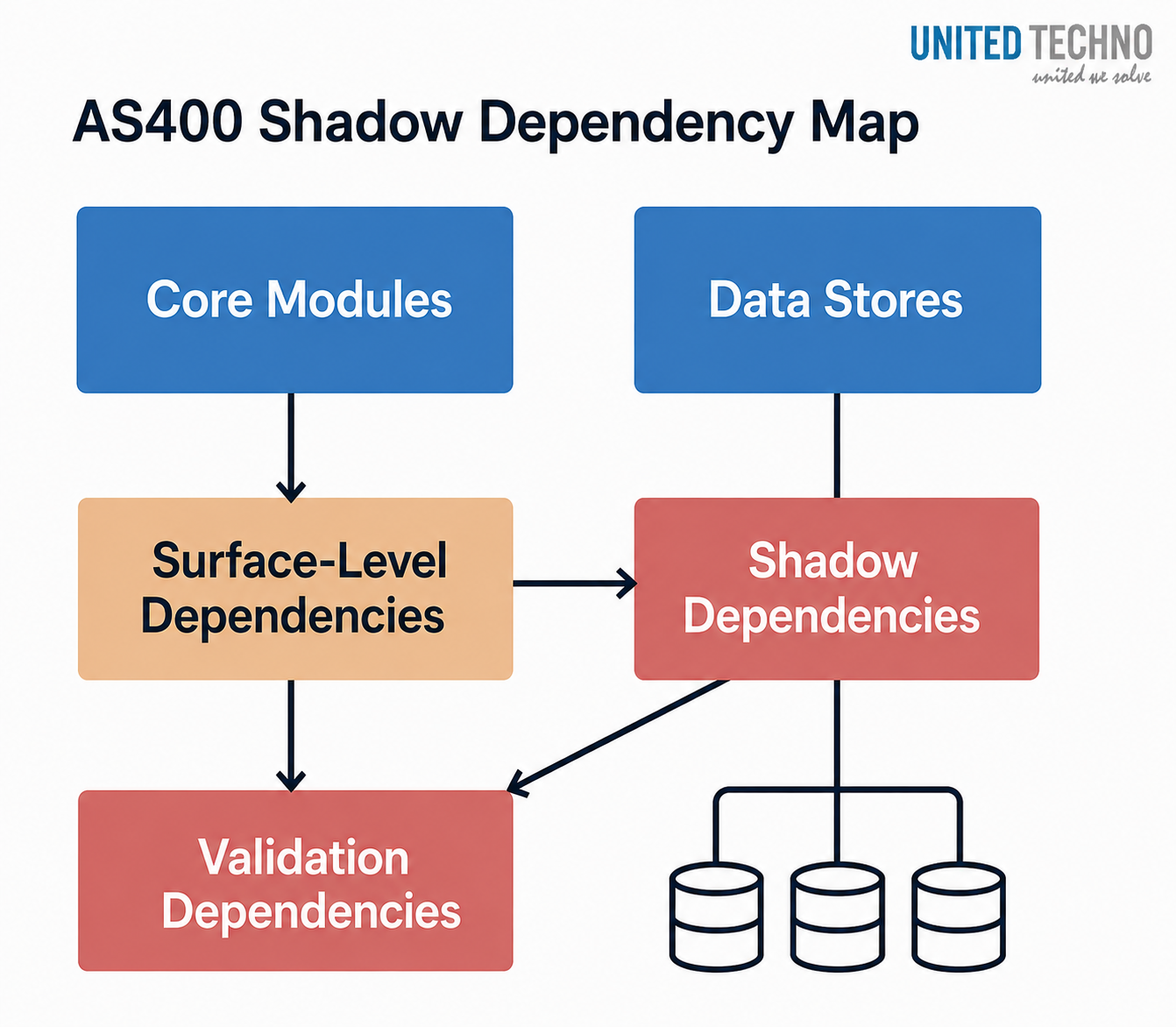
Shows:
- Core modules
- Data stores
- Surface-level dependencies (common discovery tools)
- Shadow dependencies (what we uniquely uncover)
2. Precision DDS to DDL Conversion: Zero Data Integrity Drift
What Most Miss:
Basic DDS to DDL conversions often cause data alignment issues, decimal precision drift, and broken indexes, leading to long-term performance and integrity problems.
Following best practices for AS400 Application modernization helps prevent these issues before they impact production systems.
Our Expertise:
We’ve engineered a Field-Level Validation Matrix that guarantees:
- Byte-to-byte alignment
- Referential integrity continuity
- Post-conversion SQL optimization
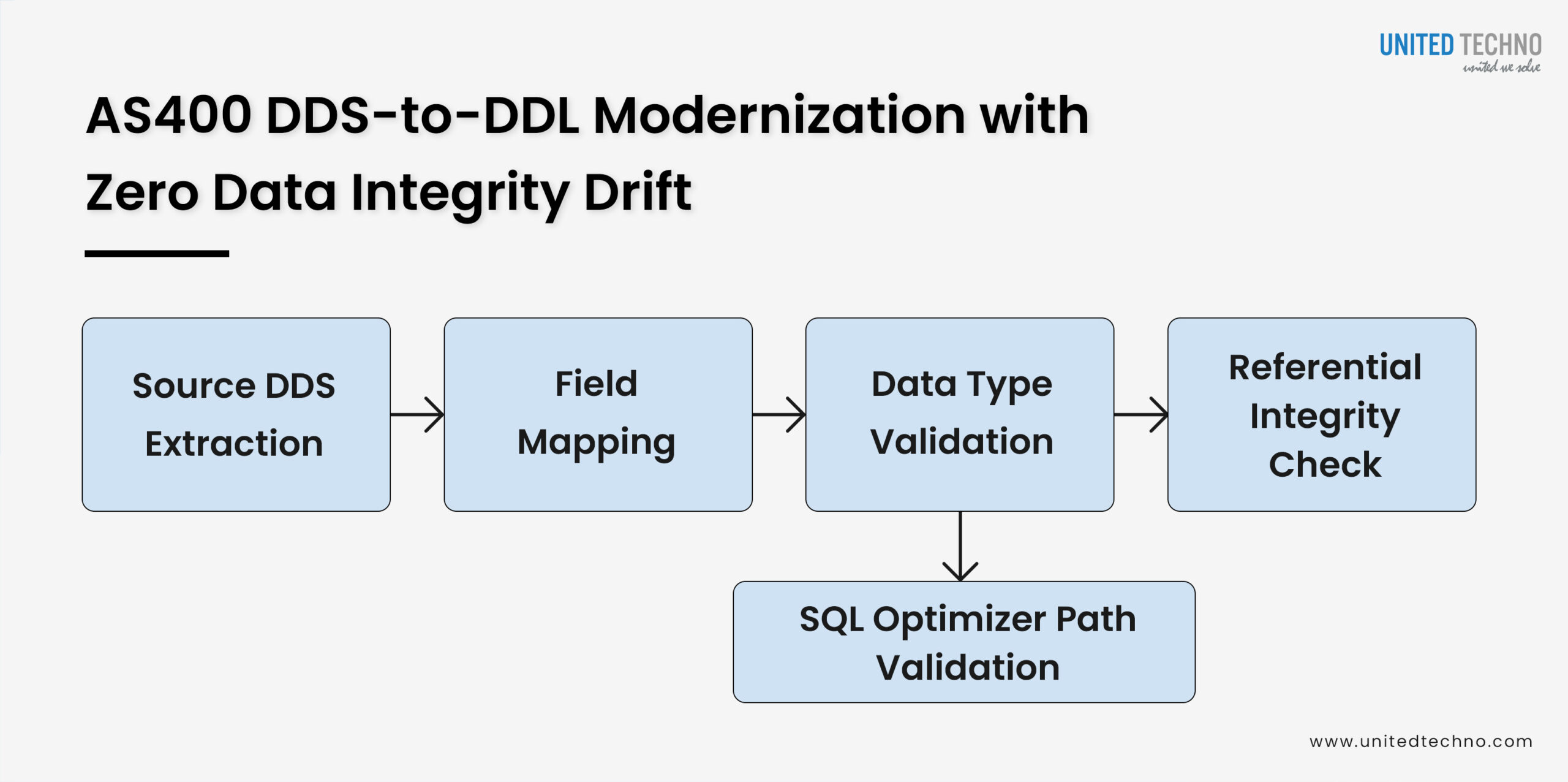
Visualizes:
- Source DDS extraction
- Field mapping
- Data type validation
- Referential integrity check
- SQL optimizer path validation
3. Hybrid Integration Gateways: Real-Time API Enablement
What Most Miss:
Many providers only wrap green screens with REST APIs that poll data at intervals — but polling is a legacy habit that limits real-time agility.
Our Expertise:
We engineer event-driven APIs using:
- IBM MQ triggers
- WebSphere MQ bridging
- Boomi / MuleSoft / Axway hybrid layers
This allows seamless, near-real-time synchronization between your AS400 and modern cloud platforms like Salesforce, Shopify, NetSuite, and beyond.
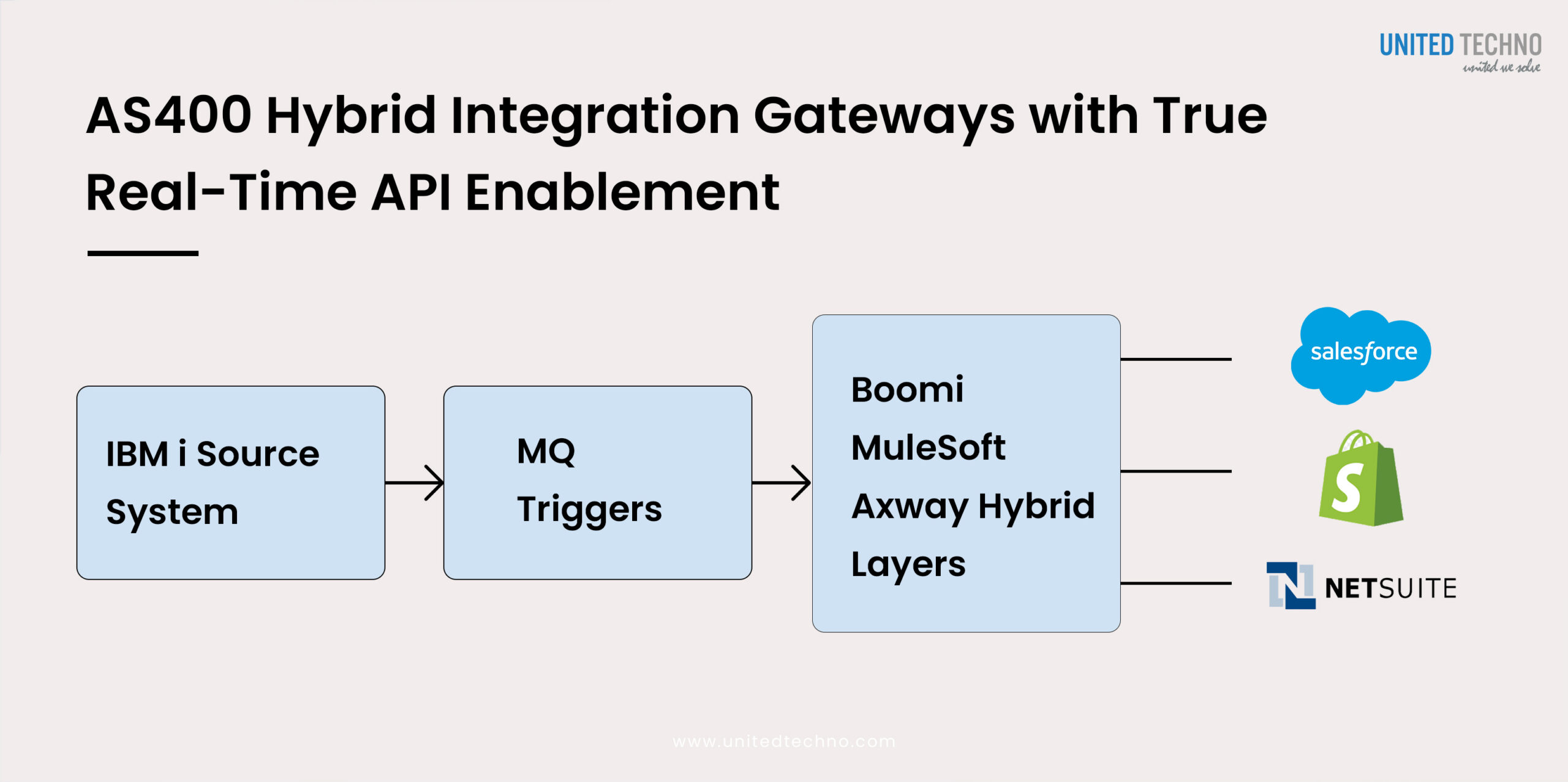
Visualizes:
- IBM i (source system)
- MQ triggers
- Integration platforms
- Downstream cloud apps
4. Zero-Downtime Modernization with Parallel Runs
What Most Miss:
Cold cutovers are risky and revenue-disruptive. Many don’t invest in parallel run strategies and try to brute-force migrations.
Our Expertise:
We design zero-downtime modernization blueprints using:
- Vision Solutions and MIMIX for real-time data replication
- Transaction log tapping
- Real-time validation dashboards to monitor data consistency
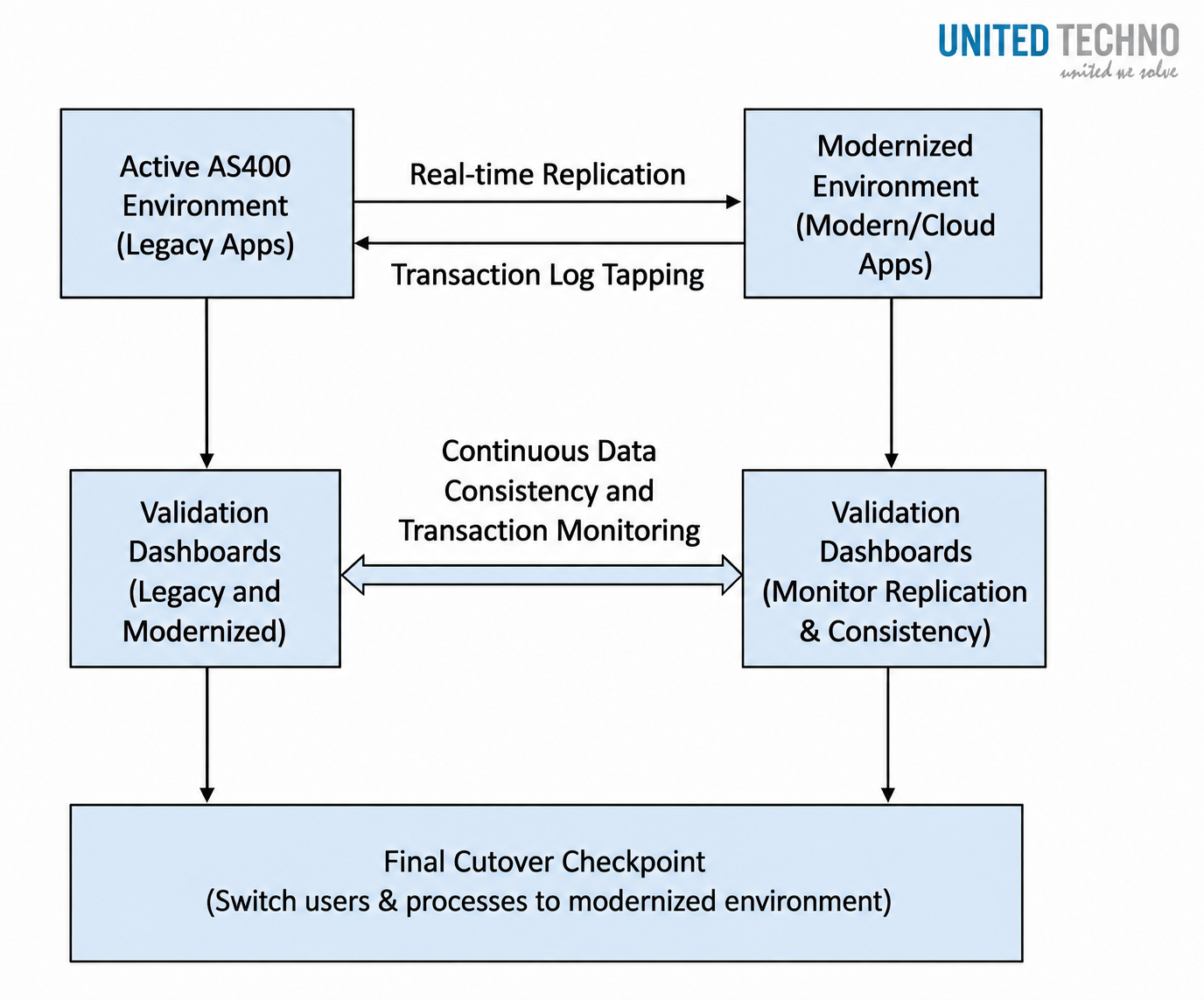
Visualizes:
- Active AS400
- Modernized environment
- Real-time replication
- Validation dashboards
- Final cutover checkpoint
5. Complexity Scoring for Prioritization
What Most Miss:
Modernization isn’t an “all-at-once” game. Not every module needs to be touched immediately — but most providers lack prioritization models.
Our Expertise:
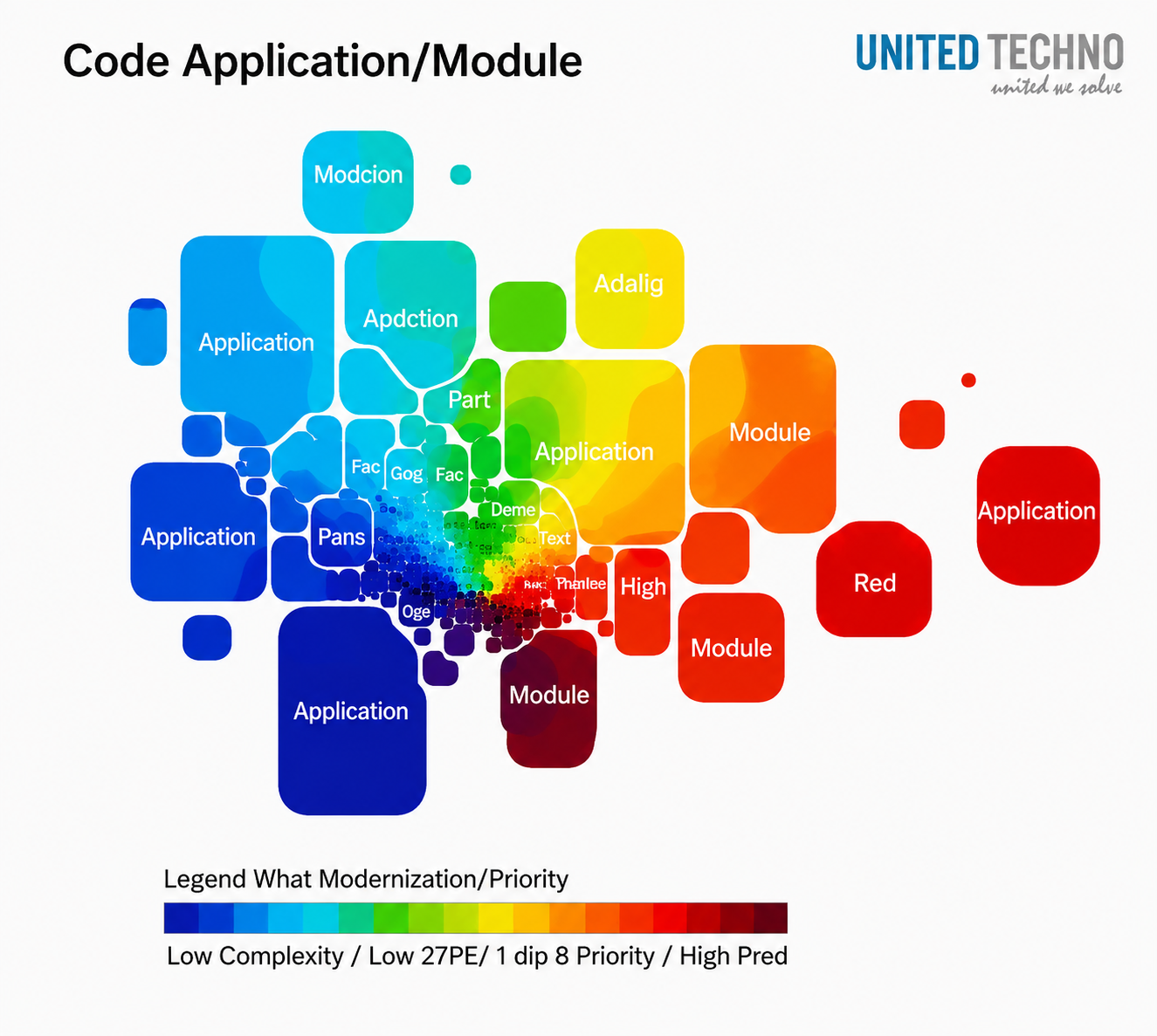
We apply a Code Complexity Scoring Model that factors:
- Cyclomatic complexity
- Hard-coded dependencies
- Business criticality
- Integration touchpoints
This approach helps us define which modules to modernize first, which can safely run as-is, and which can be decommissioned.
What Makes United Techno Different?
- Architect-Led Modernization: No one-size-fits-all approach — we build modernization roadmaps rooted in deep technical discovery.
- Zero Data Loss Commitment: Byte-level integrity and live parallel run strategies across every migration phase.
- Real-Time API Mastery: True event-driven API enablement; we don’t just wrap screens; we modernize the ecosystem.
- Business-Driven Prioritization: We modernize for business value, not just to chase technical debt.
- Proven Delivery Excellence:
- CSAT Score: 98%
- 95% of Projects Delivered On-Time & On-Budget
- 4 Multi-Year Managed Support Customers (10+ Years Each)
- AS400 Focused Team: 60+ Experts specializing in Retail, Logistics, Travel & Hospitality
Let’s Engineer Your Modernization – The Right Way
When it comes to AS400 modernization, precision matters.
Partner with United Techno’s AS400 Technical Architects who understand your core, protect your stability, and modernize with surgical accuracy.
Contact Us Today for a no-obligation modernization assessment.
Let’s engineer what’s next together.